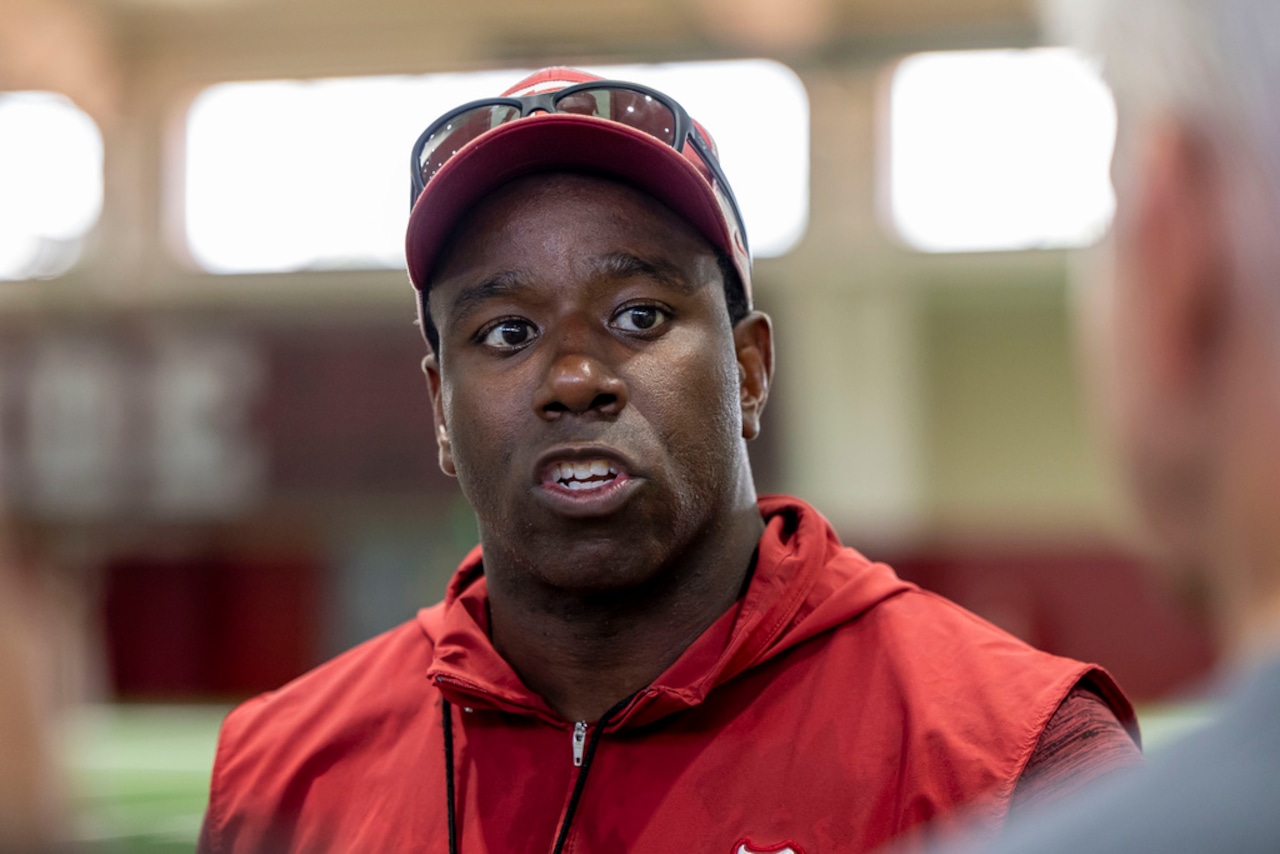
The top Alabama assistant replaces Trent Bray and becomes 33rd head coach in OSU football history.
The morning after firing Trent Bray last month, Oregon State athletic director Scott Barnes stood in front of a small throng of reporters.
He described the qualities he was seeking in a new head football coach in Corvallis. Integrity and character, he said. An ability to recruit in an era of player compensation. Experience on the West Coast, he said, would be a plus.
“And certainly,” Barnes said, “somebody that can command the enterprise, that can look at the big vision beyond the next year.”
JaMarcus Shephard, the enterprise is yours.
On Friday morning, Barnes tabbed the 42-year-old Shephard to replace Bray and become the 33rd head coach in program history. The assistant head coach and co-offensive coordinator at Alabama, he is charismatic and well-pedigreed. He has recruited at the highest level of the sport and has worked at both Washington under Kalen DeBoer and at Washington State under Mike Leach.
The one obvious hole in his resume is the fact that he has not been a head coach.
And I’ll admit, before Shephard rose to the top of the Beavers’ list, I assumed that experience would be a prerequisite after Bray flamed out in the job without having previously run his own program.
But when asked about the importance of that experience last month, Barnes said, “We’re not going to box ourselves in, because talent, the person, the leader is most important. And sometimes you find that in different shapes and sizes.”
Jonathan Smith, you’ll remember, had not been a head coach when he took over in 2018.
Nor had Dan Lanning when he landed at Oregon in 2022.
Or Kirby Smart when he went to Georgia.
Shephard takes over the program at a moment of dramatic transformation. The Beavers are in need of a full 180 as they prepare to enter the new Pac-12 on the heels of one of the most cursed seasons in program history.
Barnes is not looking for a slow rebuild here. The first years of the new conference are critical as the Pac-12 fights for position among the Group of Six conferences and the Beavers jostle with their peers in the Pac-12.
Shephard is young, 42, energetic and has connections across the sport. His first job in coaching was as a graduate assistant for Willie Taggart at Western Kentucky, earning $12,000 a year. He has worked all over the country and has recruited from coast to coast.
This year he is part of a 9-2 Bama team making a push for the College Football Playoff. He was the Huskies passing game coordinator and wide receivers coach the two years DeBoer beat Oregon three times and reached the national title game.
Those dimes that Michael Penix Jr. dropped over the Ducks’ secondary to crush championship dreams in Eugene? Give Shephard credit for those.
He will be able to recruit to Corvallis and to galvanize boosters. He is the first Black full-time head coach in the Beavers’ 132-year football history.
Perhaps most critically, Shephard represents a break from the Oregon State coaching tree with which the program has become so comfortable. By handing the keys over to someone who is truly an outside hire, Barnes is showing a willingness to think outside the box and to innovate.
With the exception of Gary Andersen, the Beavers coaching lineage over the last quarter century all traces back to Mike Riley and Dennis Erickson. No shame in that. One has the most wins in program history and the other coached Oregon State to its best season ever.
For too long, the Beavers have acted like the only people who can truly understand Oregon State, and therefore the only ones who can help them out of their present situation, are people with deep roots in the program.
That’s why Barnes turned to the apparent safety of Bray in a moment of crisis in 2023.
And why Bray, in turn, hired alums throughout his staff, including both coordinators.
The Beavers are desperate in need of new thinking. They are well past “break glass in case of emergency.”
After the world crumbled around OSU, finding someone who could reshape and reimagine the Beavers football program became all the more urgent.
That’s why Paul Chryst, the former OSU offensive coordinator who wanted the job, felt like the wrong fit in this moment.
And why Montana State’s Brent Vigen, despite his huge success at the FCS level, was a risk due to his lack of experience at the top of the sport and in the money game that recruiting has become.
And why any notion that the Beavers could reunite with Jonathan Smith was never going to work.
The Beavers continue to have an uphill climb ahead of them as they navigate their new frontier. They need help in the world of NIL and revenue sharing. They need to see themselves as more than the scrappy underdog in everything they do. They need to get fans back into the beautiful stadium they just renovated (and are still paying for).
Shephard is taking on one of the toughest jobs in college football but clearly saw just as much potential in Oregon State as the Barnes and the Beavers saw in him.
With their new leader on board, ready to command the enterprise, it is time to ask the final, truly critical question.
Who will Shephard hire as the Beavers’ special teams coach?